
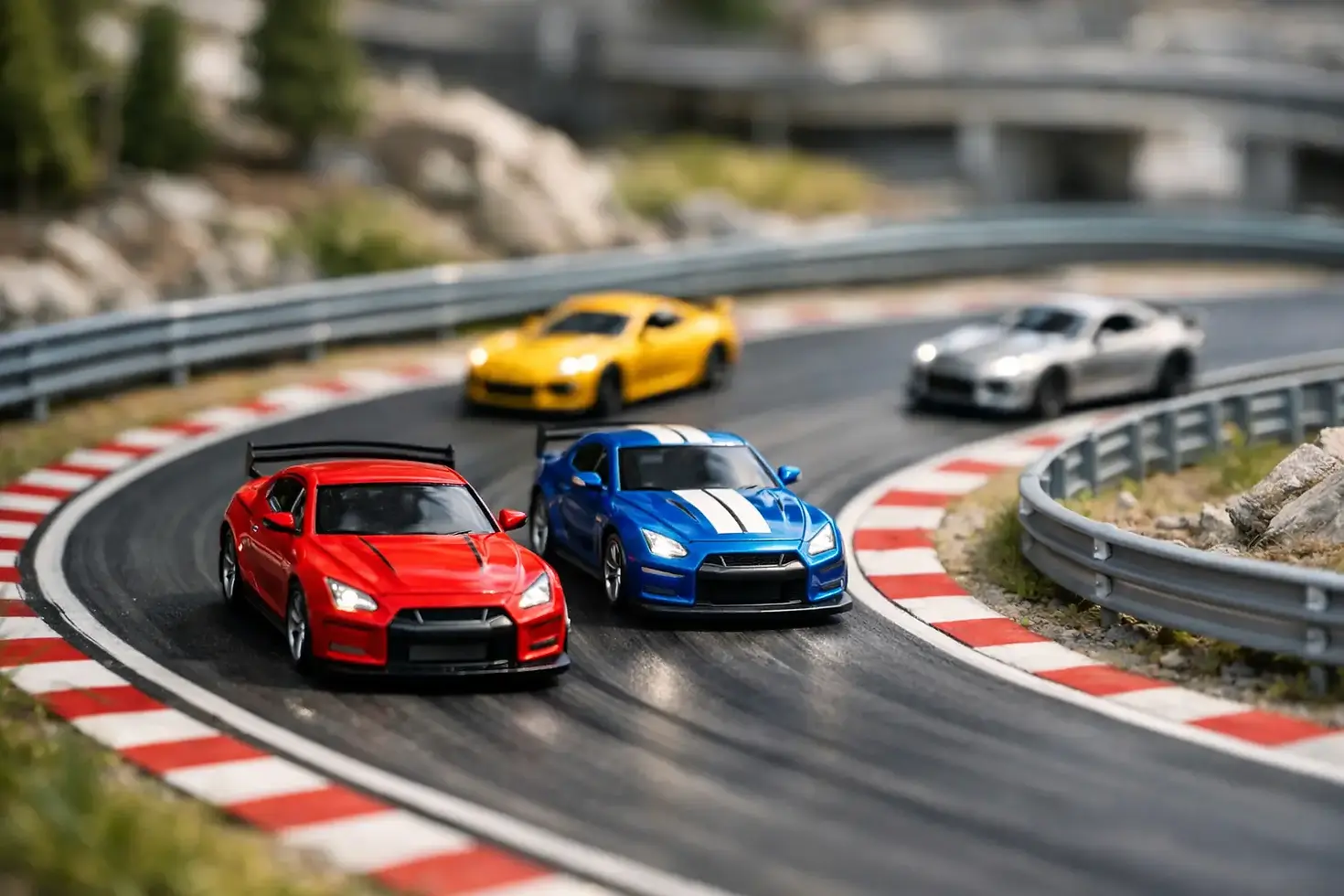
Diecast Road Course Racing for Real Competition
A fast-looking diecast car can lose its edge the moment it reaches the first tight bend. That is what makes diecast road course racing different. Straight-line speed matters, but it is only part of the job. Your build has to carry momentum, stay composed through the corners, and cross the line clean when race control starts the clock.
This is REAL RACING. SMALL SCALE. The car may fit in your hand, but every choice still shows up on the track. Wheel setup, ride height, body weight, axle alignment, and even the way the car enters a turn can decide whether it charges ahead or gives up ground.
What Makes Diecast Road Course Racing Different
A basic downhill track asks one big question: which car is fastest in a straight line? A road course asks several questions in rapid succession. Can the car settle after the launch? Does it hold its line through the bends? Does it avoid catching a wheel or dragging a low body panel? Can it keep enough speed for the next straight?
That is the appeal. A road course gives each build more opportunities to prove itself. Straights reward efficient rolling speed, while corners expose unstable setups. A car that is too tall, too loose, too heavy in the wrong place, or too wide for the course may look quick at first and then lose time where it counts.
Gravity-powered racing also makes the result easy to understand. There is no motor to tune and no controller input to hide behind. The track, the build, and the clock tell the story. When timed race days are filmed and results are posted, competitors can see how their car performed rather than guessing from a tabletop test run.
Build for the Course, Not Just the Shelf
Collectors know that a great casting deserves attention. Racers know it also needs a purpose. The best starting point is not always the coolest body in the case. It is the car that gives you a workable platform within the event rules.
Before modifying anything, check the class requirements. Rules protect fair competition and prevent a race from becoming an arms race of impossible-to-verify changes. They also help builders choose the right approach from the start. A stock class may reward careful selection and legal tuning. A modified class may give you more room to refine the chassis, wheels, axles, and weight distribution.
Keep the Roll Clean
On a gravity course, wasted energy is the enemy. A car needs to roll freely without obvious rubbing, binding, or wobble. That does not mean every car should be stripped down until it feels fragile. It means each moving part should do its job without stealing speed.
Start by checking the wheel and axle area. Look for contact between the wheels and body, wheels and chassis, or axles and surrounding material. Make small adjustments and test often. Aggressive changes made all at once can create a new problem that is harder to trace.
A free-rolling car is a foundation, not a guaranteed winner. If it cannot stay settled in the corners, its clean roll will not save it.
Think About Clearance in the Turns
Road course racing puts a premium on a car that can move through curves without clipping, dragging, or hanging up. Low can be fast, but low can also become a liability if the course geometry punishes it. Wider can look planted, but excessive width may cause contact where a narrower setup would slip through cleanly.
This is where the right answer depends on the car and the class. A sleek, low-profile casting may carry speed beautifully. Another car may need a little more clearance and a more forgiving setup to stay reliable. The goal is not to build the most extreme car. The goal is to build the quickest legal car over the entire course.
Balance Helps More Than Bragging Rights
Weight is not just about making a car heavier. Where that weight sits affects how the build behaves. A car with a poor balance can feel unsettled, especially when the course asks it to change direction or recover after a transition.
Use a measured approach. Make one legal adjustment, test it, and record what changed. Did the car roll farther? Did it track straighter? Did it become more stable, or did it start dragging? Builders who keep notes improve faster because they are not relying on memory after every test session.
Testing Is Where the Build Gets Honest
A kitchen floor test can reveal obvious problems, but it cannot fully duplicate a purpose-built road course. Different tracks have different turns, transitions, surface conditions, lane widths, and release points. That is why a car can dominate at home and still face a tougher fight on race day.
Home testing still matters. Use it to identify bad roll, wheel rub, crooked tracking, and loose parts before you send your entry. A simple incline can tell you whether one build consistently rolls cleaner than another. If the car veers hard or stops early, solve that issue before chasing tiny performance gains.
Do not confuse testing with overbuilding. Every modification carries a trade-off. A change that gains a fraction of speed may reduce reliability. A setup that feels perfect in one condition may be less forgiving when the course asks more of it. Reliable cars earn results because they make it through every run.
Race Day Is More Than a Single Run
The real payoff comes when your car reaches the grid. It has been checked in, placed into the event format, and sent down a physical course against other builders' entries. That changes the experience from private tinkering to documented competition.
At Timber Creek Speedway, competitors can build or prepare a 1:64 car, ship it to the track, and watch it take on the course in filmed, timed race action. You do not need to build a full race facility in your garage to join the field. You bring the build. The track handles the race environment, timing, and published results.
That structure matters. Clear rules give competitors a common standard. Race control keeps the event organized. Filmed runs give builders visible proof of what happened on course. Whether your car wins, gets edged out by a few ticks, or finds a weakness in the turns, you leave with information you can use.
A loss is not wasted entry time when it teaches you something. Maybe the body choice was too aggressive for the bends. Maybe the setup rolled well but lacked stability. Maybe another builder found a better balance between straight speed and corner performance. That is how a hobby becomes a competitive craft.
The Best Builders Learn From Every Result
The fastest way to improve is to treat each event like a test session with stakes. Watch the footage closely. Pay attention to where your car gains speed, where it looks unsettled, and where it loses momentum. Then compare those observations with the build decisions you made before sending it in.
Keep your next revision focused. Change the car selection, refine the clearance, address a known rub point, or try a different legal tuning approach. Do not rebuild every variable at once. If you change everything, you will not know what actually made the car better.
Road course racing rewards patience, but it does not demand perfection before you enter. Send a car you are proud of. Let it face the clock. Then use the result to build the next one smarter. The turns will always tell you what your car needs next.


Comments